What Are the Pros and Cons of Different Roofing Materials After Storm Damage?
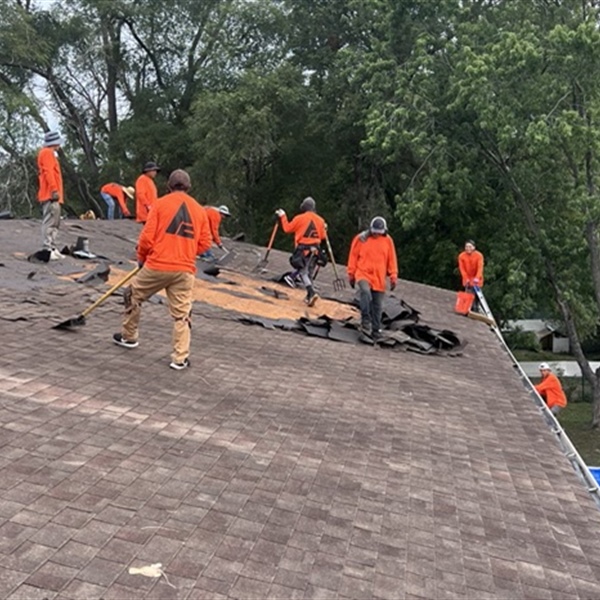
Big Midwest storms expose how roofing materials actually behave under stress: high-velocity hail, suction and uplift from straight-line winds, and weeks of driving rain that probe every joint and fastener.
In this article, we'll break down what the data and field performance say about common options after severe weather — how asphalt shingles absorb and dissipate impact, why panel seams and fastener patterns matter on metal roofs, what manufacturers really cover, and how budgets align with life-cycle risk. You’ll find practical takeaways you can apply to post-storm decisions without guesswork.
Allied Construction has inspected thousands of storm-damaged assemblies across steep-slope systems, and the patterns are consistent. If you’re triaging damage today or planning replacements for resilience, keep on reading!
Hail Impact Behavior of Asphalt Shingles: Composition, Geometry, and Aging Effects
Asphalt shingle hail performance depends on three primary variables: mat type (fiberglass vs. organic, with modern products almost exclusively fiberglass), asphalt formulation and filler ratio (stiffness vs. toughness tradeoffs), and surfacing granule adhesion.
Thicker shingles with heavier total mass per square and robust SBS-modified asphalt generally resist surface fracturing and granule spall better under kinetic energy transfer. Multi-layer architectural shingles distribute impact through laminated plies, reducing stress concentration at the mat. Conversely, aged shingles with oxidized asphalt and embrittled mats show higher rates of radial or crescent cracks from identical hailstone diameters and velocities.
Test method context is crucial when interpreting “hail-rated” claims. UL 2218 Class 3/4 evaluates impact resistance using steel balls dropped from specified heights on conditioned samples; it’s a comparative lab test for dent/crack resistance, not a guarantee against all real-world hail morphologies (wet, spiky, oblate) or wind-driven vectors. Field failure modes include granule loss, exposing asphalt to UV (accelerating aging), subsurface mat fractures that go undetected without lift checks, and sealant line shear from impact-induced shingle flutter. Install factors — nail placement, deck stiffness, and ventilation affecting service temperature — shift outcomes measurably.
Post-storm assessment should distinguish cosmetic granule displacement from functional damage that shortens service life. Indicators of functional impairment include soft spots that “give” over fractured mats, consistent strike patterns on slopes perpendicular to storm trajectory, and displaced or torn sealant bonds along shingle butts.
Storm Resistance of Metal Roofing: Standing-Seam vs. Exposed-Fastener Systems
Panelized metal roofs manage hail and wind loads differently than shingles. Standing-seam systems use concealed clips that allow thermal movement while anchoring against negative pressures; their raised seams reduce water entry risk during wind-driven rain.
Exposed-fastener systems rely on visible screws with sealing washers; performance under cyclic uplift depends on fastener density, substrate pull-out strength, and washer integrity. Hail rarely perforates quality steel or aluminum panels, but it can produce cosmetic denting. Structural risk rises when dents occur near seams or clip locations that experience cyclic bending, or when impact dislodges factory finishes and creates future corrosion sites.
Wind resistance turns on panel geometry, clip spacing, and edge detailing. Eaves, ridges, and corners undergo the highest suction; inadequate clip patterns or missing continuous cleats at rake/hip transitions are common failure points. Hydrostatic performance also depends on seam type (mechanically seamed double-lock profiles outperform snap-lock in extreme conditions) and underlayment selection, as high-temperature self-adhered membranes provide secondary water shedding if wind-borne debris compromises panels.
For exposed-fastener systems, long-term storm reliability is gated by fastener relaxation, thermal cycling that ovalizes holes, and aged washers; periodic torque checks and fastener replacement are integral to maintaining the assembly’s rating.
When comparing standing-seam to exposed-fastener options strictly for storm risk, concealed-fastener assemblies with mechanically seamed profiles and tested clip systems provide superior resistance to wind-driven intrusion and reduce points of seal failure. That said, large hail can dent even high-end assemblies; insurers may classify that as cosmetic unless coating damage or functional impairment is demonstrated.
Warranties That Matter for Storm-Resistant Roofs: Material, System, and Workmanship
Warranties vary widely in scope. Manufacturer material warranties typically cover defects in manufacture, such as premature granule loss beyond normal wear for shingles, or coating adhesion failure for metal, not weather events.
“Impact-rated” shingles (e.g., UL 2218 Class 4) may qualify for insurance incentives but are not hail-damage warranties. Some manufacturers offer limited enhanced guarantees when installed as a “system” (underlayment, starter, vents, fasteners from the same brand) and registered by certified contractors; these may extend non-prorated periods and include limited labor for covered defects, but exclusions for “acts of God” (hail, wind over stated thresholds) often remain.
Wind warranties are tied to installation parameters. For shingles, achieving the published wind rating depends on using specified nails per shingle, correct placement through the common bond, appropriate deck thickness, and sealed tabs within ambient temperature guidance. For metal, wind-uplift warranties often require documented clip spacing, fastener type, substrate, and edge-metal details per tested assemblies (e.g., UL 580/1897). Workmanship warranties — from the installer — address installation errors that manifest as leaks or blow-offs; durations range from one to ten years, and terms should define inspection timelines, maintenance obligations, and claim procedures.
Key due diligence items: obtain the full warranty document (not just a brochure), confirm transferability after property sale, verify registration steps and deadlines, and record product/lot numbers and as-built details (fastener counts, underlayments, seam type). Distinguish cosmetic from functional exclusions, especially for metal denting. When insurers require like-kind replacement, warranty alignment with upgraded materials should be clarified before contract execution to avoid coverage gaps.
Balancing Cost and Durability After Storms: Initial Spend vs. Life-Cycle Risk
Cost-effectiveness hinges on hazard frequency and the consequences of failure for your building. Architectural Class 3–4 shingles typically offer the lowest first cost per square with improved impact and wind performance over 3-tabs; they are economical where hail frequency is moderate and roof geometry is complex.
Metal standing-seam roofs command a higher initial investment but often yield lower long-term leak risk due to fewer penetrations and a robust secondary water plane when paired with high-temp self-adhered underlayment. Exposed-fastener metal generally sits between these two on first cost but can overtake standing-seam in life-cycle expense if fastener maintenance is deferred.
Insurance dynamics matter. In regions with recurrent hail, some carriers shift policies to actual cash value (ACV) for roofs past a certain age, eroding claim payouts. Upgrading to impact-rated assemblies can preserve value under such policies, though premium credits vary. Consider the “time-to-first-major-repair” metric: if an impact-rated shingle extends the interval between claimable events and reduces collateral damage (soffits, gutters, attic wetting), the effective cost per service year drops even if the initial bid is higher.
Quantitatively, compare net present cost across options: bid price; expected maintenance (fastener cycles for exposed metal, sealant bead checks on flashing, ventilation tune-ups); probable deductibles from more frequent minor claims; and residual value at sale. Where budgets are tight, targeted upgrades — Class 4 shingles on windward slopes, enhanced ice/water shield at eaves, or upgraded ridge ventilation — can capture a disproportionate share of resilience gains without the full premium of a metal conversion.
Long-Term Maintenance Implications by Material After Storm Repairs
Asphalt shingles require periodic surveillance of high-stress details: ridges, rakes, and penetrations. After any significant storm, check for broken seals along the adhesive strip, displaced granules exposing asphalt, and flashing displacement.
Repairs must restore the seal path and fastener embedment into sound decking. Over the long term, ventilation and attic humidity control reduce thermal cycling and brittleness, extending service life and keeping the shingle adhesive functional. Replacement shingles aged-matched to the field reduce differential weathering and curl.
Standing-seam metal demands a different maintenance regime. Clips and seams are shielded, but accessories — pipe boots, snow retention, and ridge flashings — experience cyclic loading. Annual checks for fastener back-out at accessory points, coating abrasion from debris, and sealant shrinkage at terminations keep assemblies watertight. Exposed-fastener metal requires scheduled washer and fastener replacement as elastomers harden and screws relax; hail seasons accelerate this timeline. Keep valleys clear; trapped ice and debris concentrate loads and can telegraph wear into coatings.
Copper and zinc develop protective patinas but are softer; after hail, inspect for dent clusters near seams where bending strains localize. Tile and slate deliver excellent storm longevity when installed to current uplift standards, but individual unit breakage from large hail and impact debris necessitates stocked spares and secure, non-brittle underlayments for secondary protection.
How Allied Construction Can Help Across Materials and Storm Scenarios
Allied Construction delivers end-to-end storm restoration for steep-slope systems, even offering brand-aligned accessory packages that preserve manufacturer coverage. Our inspection protocol documents slope-by-slope impact density, seal failure, substrate deflection, and flashing condition, then pairs findings with tested assemblies that meet current wind and ice barrier standards.
Whether you’re evaluating asphalt, metal, or specialty materials, we align the scope with your insurer’s requirements and your tolerance for future maintenance. Reach out to us at 952-737-8496 or contact us online to schedule an assessment or request documentation for your claim.